Commercial Grow Room HVAC
Commercial Grow Room HVAC Systems Built for Large-Scale Cultivation
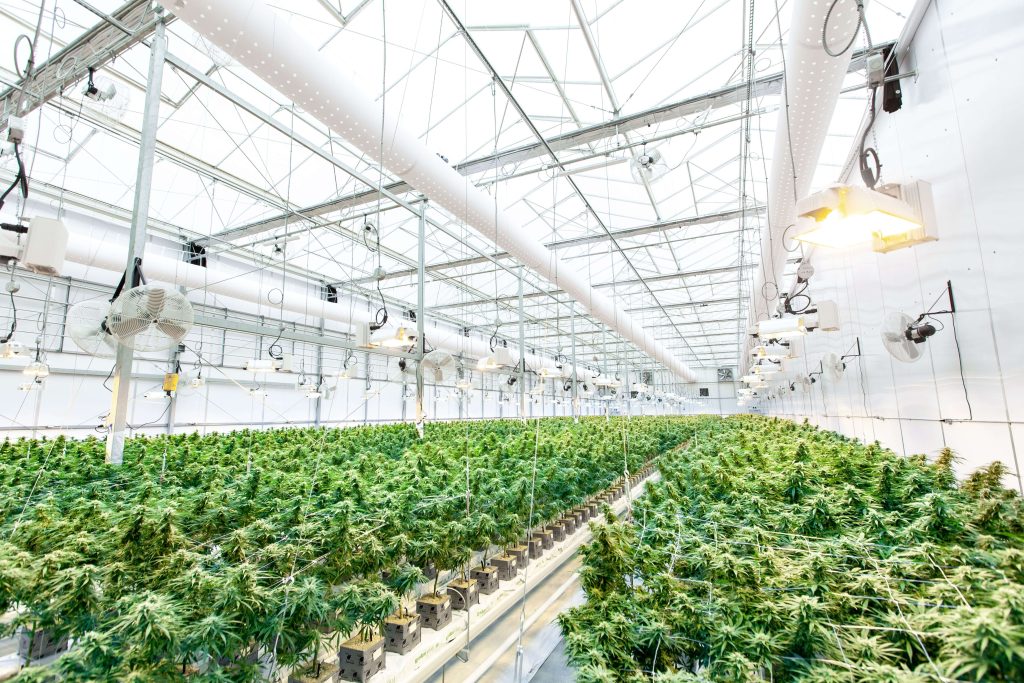
Commercial indoor cultivation requires environmental control on an entirely different scale than a small grow operation. High-density plant production, powerful lighting systems, substantial moisture loads, multiple cultivation rooms, and demanding production schedules create HVAC requirements that conventional commercial equipment may not be designed to handle.
A properly engineered Commercial Grow Room HVAC system must maintain precise temperature and humidity conditions while responding to continuously changing loads throughout the cultivation cycle. It must also provide the reliability, flexibility, controls, and capacity required for an operation where environmental interruptions can put valuable crops at risk.
Cultiva Systems specializes in HVAC equipment and intelligent environmental controls engineered specifically for commercial indoor agriculture and cannabis cultivation. We work directly with engineers, mechanical contractors, facility developers, and cultivation professionals to understand project requirements and provide equipment designed to achieve the desired environmental conditions.
Whether you’re developing a new commercial grow facility, expanding production, or upgrading an existing mechanical system, Cultiva Systems provides specialized HVAC solutions designed around the demands of controlled indoor cultivation.
Your partner in cultivation
Why Commercial Grow Rooms Need Specialized HVAC
A commercial grow room isn’t simply another conditioned space.
Plants continuously add moisture to the environment through transpiration. Grow lighting generates substantial heat. Irrigation, pumps, electrical equipment, people, and other facility systems add additional loads.
Unlike many traditional commercial spaces, these loads can change dramatically depending on the time of day and stage of cultivation.
Commercial grow room HVAC must account for factors such as:
- High sensible heat loads
- Significant latent moisture loads
- Plant transpiration
- Lighting schedules
- Irrigation cycles
- Crop density
- Cultivation stage
- Temperature targets
- Relative humidity targets
- Air distribution
- CO₂ strategies
- Multiple cultivation zones
- Day and night operating conditions
The HVAC system must manage these variables while maintaining consistent environmental conditions across the growing space.
Managing Large Sensible and Latent Loads
Understanding both sensible and latent loads is fundamental when designing HVAC for commercial cultivation.
Sensible load affects the temperature within the room. Lighting systems, electrical equipment, pumps, people, and heat transfer through the building envelope all contribute to sensible heat.
Latent load is associated with moisture in the air.
Plants can introduce substantial quantities of moisture into commercial grow rooms through transpiration. As plants mature and cultivation density increases, this moisture load can become one of the most demanding aspects of environmental control.
The challenge is that sensible and latent loads don’t always change together.
When grow lights turn off, the heat load may decrease quickly. Plant transpiration and moisture within the room, however, can continue to create humidity-control demands.
Commercial Grow Room HVAC equipment must therefore be capable of managing temperature and moisture under varying operating conditions rather than being selected based solely on peak cooling demand.
Temperature Control for Commercial Cultivation
Temperature influences photosynthesis, plant respiration, nutrient movement, transpiration, and overall crop development.
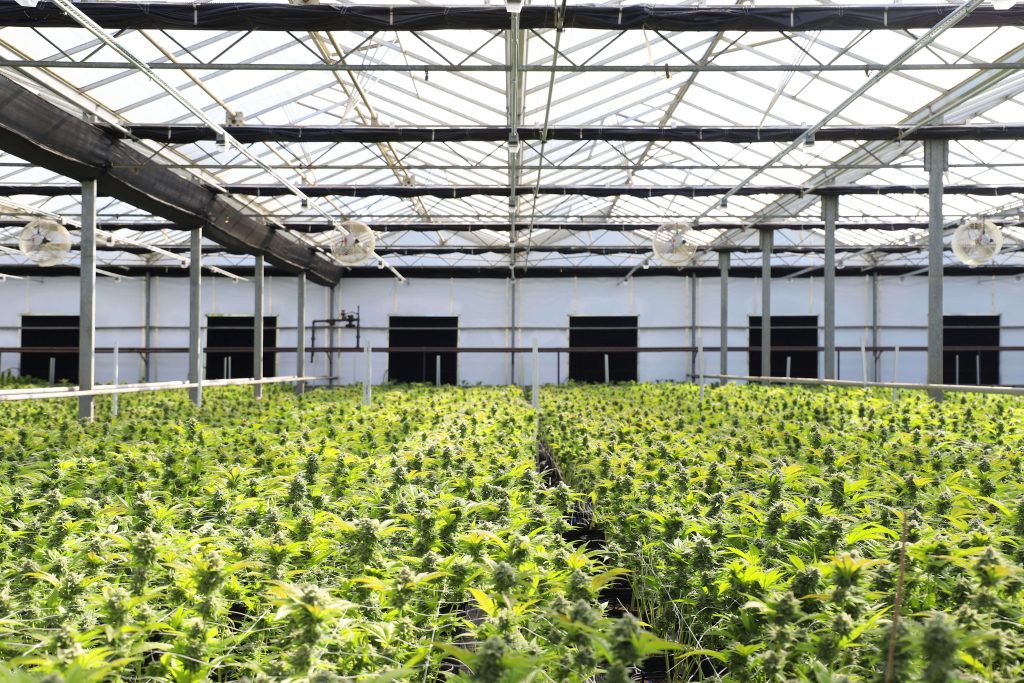
Commercial facilities need to maintain their selected temperature targets consistently across potentially thousands of plants.
Environmental fluctuations that seem minor within a small space can become much more significant when multiplied across a large production operation.
Properly designed HVAC equipment helps maintain stable temperatures as:
- Lights cycle on and off
- Plants mature
- Irrigation occurs
- Outdoor temperatures change
- Occupancy varies
- Equipment loads fluctuate
Maintaining this stability allows cultivation teams to establish repeatable environmental strategies from one crop cycle to the next.
Commercial Grow Room Humidity Control
Humidity management is one of the most important functions of commercial cultivation HVAC.
Water supplied through irrigation doesn’t simply remain in the growing medium. Plants absorb that water and eventually release a significant portion of it into the surrounding air through transpiration.
In a densely populated cultivation room, the resulting moisture load can be substantial.
If humidity isn’t properly managed, the environment may become more favorable for:
- Mold
- Mildew
- Condensation
- Plant disease
- Inconsistent transpiration
- Uneven crop development
Cultiva Systems equipment is engineered to address the demanding latent loads found within indoor agriculture and commercial cultivation facilities.
HVAC for Multiple Cultivation Rooms and Zones
Commercial grow facilities rarely consist of a single cultivation space.
Operations may include separate areas for:
- Propagation
- Cloning
- Mother plants
- Vegetative growth
- Flowering
- Drying
- Curing
- Processing
- Storage
Each space can have different environmental requirements and operate on a different schedule.
One flowering room may have its lights on while another is operating in a lights-off period. A vegetative room may have a different moisture load than a room containing mature flowering plants.
These variations make zone-specific environmental management an important consideration for commercial grow facility design.
Rather than treating the entire building as one uniform environment, HVAC systems can be planned around the specific demands of individual cultivation spaces.
Supporting VPD Across Large Grow Rooms
Many commercial growers use Vapor Pressure Deficit (VPD) as part of their environmental strategy.
Because VPD is influenced by temperature and moisture conditions, maintaining consistent HVAC performance becomes particularly important.
A commercial grow room may technically reach the desired temperature while still experiencing humidity variations from one area of the room to another. These differences can create inconsistent growing conditions across the crop.
Precise HVAC control combined with effective air distribution helps cultivators maintain environmental conditions more consistently across larger growing spaces.
Air Distribution and Grow Room Uniformity
HVAC performance isn’t simply about achieving the correct conditions at the thermostat.
Commercial grow rooms contain dense plant canopies, lighting fixtures, cultivation racks, irrigation infrastructure, structural components, and other obstacles that can influence air movement.
Without proper distribution, different areas of the room may experience different temperatures and humidity levels.
These localized microclimates can contribute to inconsistent plant development.
Effective air distribution can help provide:
- More uniform room temperatures
- Consistent relative humidity
- Improved canopy air movement
- Better CO₂ distribution
- Fewer stagnant-air areas
- Reduced hot and cold spots
- More consistent environmental conditions
For large-scale cultivation, environmental uniformity can be essential for achieving predictable crop quality across the entire room.
HVAC Capacity for Commercial Grow Facilities
Selecting HVAC capacity for a commercial grow room requires more than calculating square footage.
Two cultivation rooms of identical size can create dramatically different mechanical loads depending on lighting, plant density, irrigation, environmental targets, and operating strategy.
Factors that should be considered include:
- Grow room dimensions
- Lighting type and intensity
- Number of lights
- Plant quantity
- Plant density
- Expected transpiration
- Irrigation volume
- Equipment heat
- Temperature targets
- Humidity targets
- Airflow requirements
- Room operating schedules
Cultiva Systems works directly with engineers and contractors to understand the load requirements of a given space and provide equipment capable of achieving the desired environmental conditions.
Vertical & Horizontal Self-Contained HVAC Systems
For projects requiring self-contained equipment, Cultiva Systems offers vertical and horizontal systems available from 10 to 45 tons.
Both air-cooled and water-cooled configurations are available.
Removable panels provide field-configurable airflow arrangements including:
- Top discharge
- Rear discharge
- Front discharge
- Rear return air
This flexibility can be particularly valuable in commercial facilities where mechanical space, duct routing, existing infrastructure, or building configuration limits equipment placement.
CO₂, Lighting and Environmental Automation
Commercial grow room management often requires coordination between HVAC and additional cultivation systems.
Cultiva Systems’ standard sequence of operations includes:
- Space temperature control
- Humidity control
- CO₂ injection
- Purge
- High CO₂ alarm strobes
- Lighting
Integrating these functions within the environmental control strategy helps cultivation teams coordinate important operating conditions while reducing reliance on separate, disconnected control systems.
Packaged HVAC Systems for Commercial Grow Rooms
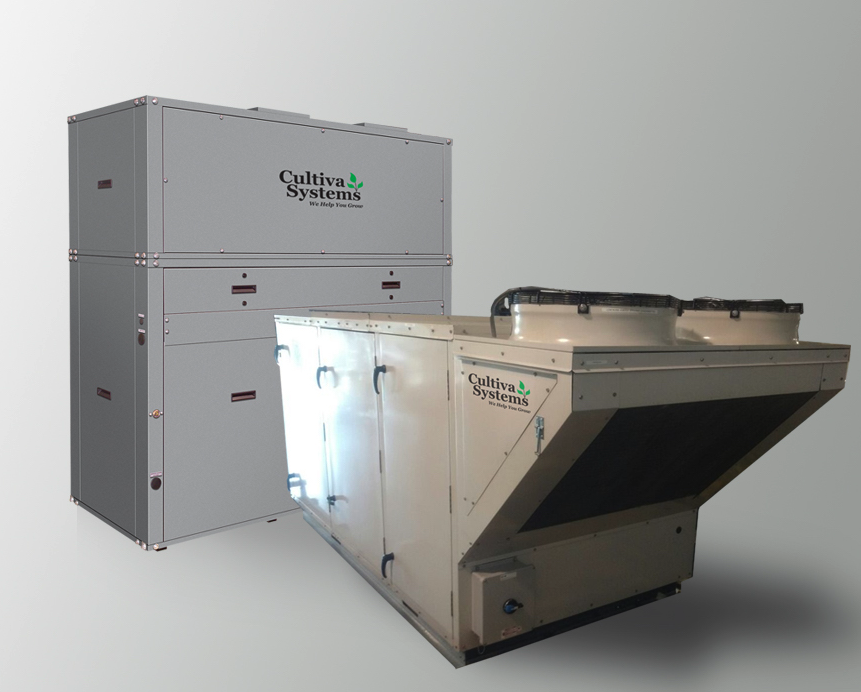
Cultiva Systems packaged units provide substantial capacity and installation flexibility for commercial indoor farming and cultivation projects.
Our packaged systems are available in air-cooled and water-cooled configurations ranging from 10 to 60 tons.
Installation options include:
- Rooftop mounting
- Ground mounting
- Bottom discharge and return
- Horizontal discharge and return
- Custom top discharge
- Horizontal return configurations
These options allow engineers to develop HVAC layouts around the needs and physical characteristics of the cultivation facility.
Intelligent Grow Room Controls with the FS32
Large cultivation facilities require visibility into environmental performance.
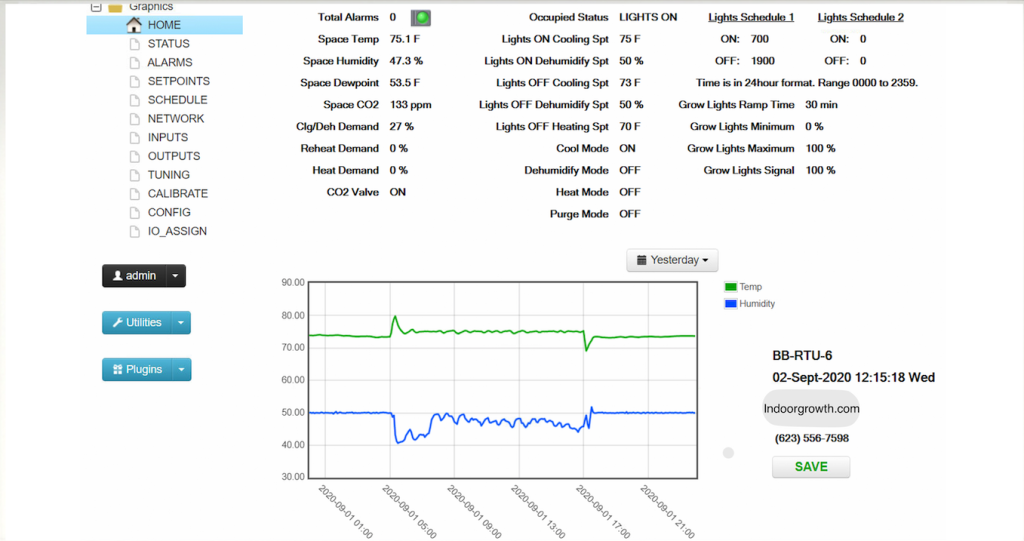
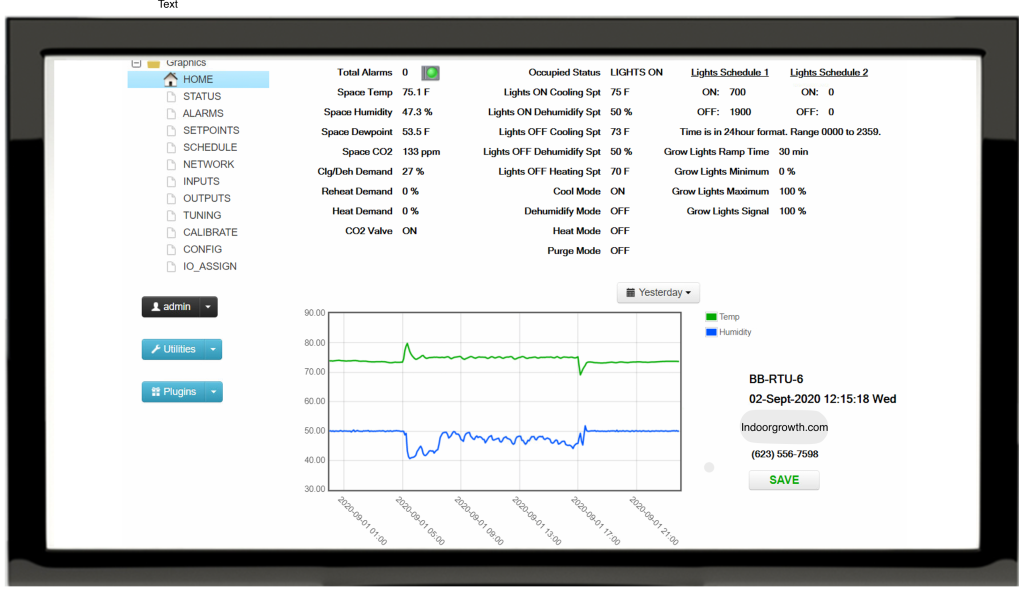
The Cultiva Systems FS32 controller provides an advanced browser-based platform designed to simplify environmental management while maximizing HVAC equipment capabilities.
The built-in web server utilizes PHP and HTML5 graphics and supports multiple devices and platforms.
Operators have access to features including:
- Real-time operational status
- Input and output monitoring
- Temperature and humidity setpoints
- System configuration
- Internal scheduling
- Historical data collection
- Alarm reporting
- Application backup and restore
- Customizable user accounts
Connectivity can be provided through hard-wired Ethernet or Wi-Fi with the supplied router.
For facility operators managing multiple cultivation areas, this centralized visibility can make it significantly easier to evaluate environmental conditions and equipment operation.
Building Automation Integration
Commercial cultivation facilities may also incorporate HVAC equipment into a facility-wide Building Automation System.
The FS32 controller supports native:
- BACnet IP
- BACnet MSTP
- Modbus TCP
- Modbus RTU
This compatibility gives engineers and facility managers additional flexibility when integrating Cultiva Systems equipment with compatible BAS platforms and other building systems.
Reliability Matters in Commercial Cultivation
For a commercial grower, HVAC is production infrastructure.
Environmental conditions directly influence the crop, meaning HVAC performance can have consequences far beyond occupant comfort.
Unexpected temperature or humidity conditions can put valuable plants at risk, particularly during sensitive stages of cultivation.
For this reason, commercial HVAC planning should consider not only capacity but also:
- Equipment reliability
- Service accessibility
- Alarm capabilities
- System monitoring
- Operational visibility
- Maintenance requirements
- Facility expansion plans
- Contingency planning
The appropriate strategy will depend on the facility, crop value, production schedule, and acceptable level of operational risk.
Cultiva Systems works with project teams to help develop HVAC solutions around the specific requirements of the cultivation operation.
Planning HVAC for a New Commercial Grow Facility
HVAC planning should begin early when designing a new commercial cultivation facility.
Mechanical equipment can affect numerous aspects of building design, including:
- Electrical requirements
- Mechanical-room sizing
- Roof loading
- Structural considerations
- Duct routing
- Plumbing
- Drainage
- Equipment access
- Facility layout
- Building controls
Addressing HVAC early gives architects, engineers, contractors, and cultivation professionals an opportunity to coordinate these systems before construction is underway.
Cultiva Systems works directly with project engineers and contractors to understand environmental requirements and help identify appropriate equipment configurations.
Expanding an Existing Commercial Grow Operation
Many successful cultivation businesses eventually need additional production capacity.
Expansion may involve adding new rooms, increasing plant density, installing more powerful lighting, changing irrigation practices, or converting existing areas into cultivation space.
Each of these changes can alter HVAC requirements.
Before expanding production, facilities should consider whether existing mechanical infrastructure can support the additional sensible and latent loads.
This evaluation can help identify whether existing equipment remains appropriate or whether additional HVAC capacity should be incorporated into the expansion.
Energy Efficiency and Commercial Operating Costs
Indoor cultivation can be energy intensive, and HVAC represents an important component of facility operating expenses.
Equipment that isn’t properly matched to the cultivation environment may operate inefficiently while still struggling to maintain the desired conditions.
A well-planned system should balance environmental performance with long-term operational efficiency.
Cultiva Systems’ collaborative approach helps engineers and contractors select equipment based on actual cultivation loads, environmental targets, and facility requirements.
The objective is to create reliable environmental control without treating energy efficiency as an afterthought.
Commercial Grow Room HVAC for Cannabis and Indoor Agriculture
While many of the most demanding commercial grow room applications involve cannabis cultivation, the same fundamental HVAC challenges occur throughout Controlled Environment Agriculture.
Cultiva Systems equipment can support commercial applications including:
- Cannabis cultivation
- Indoor farming
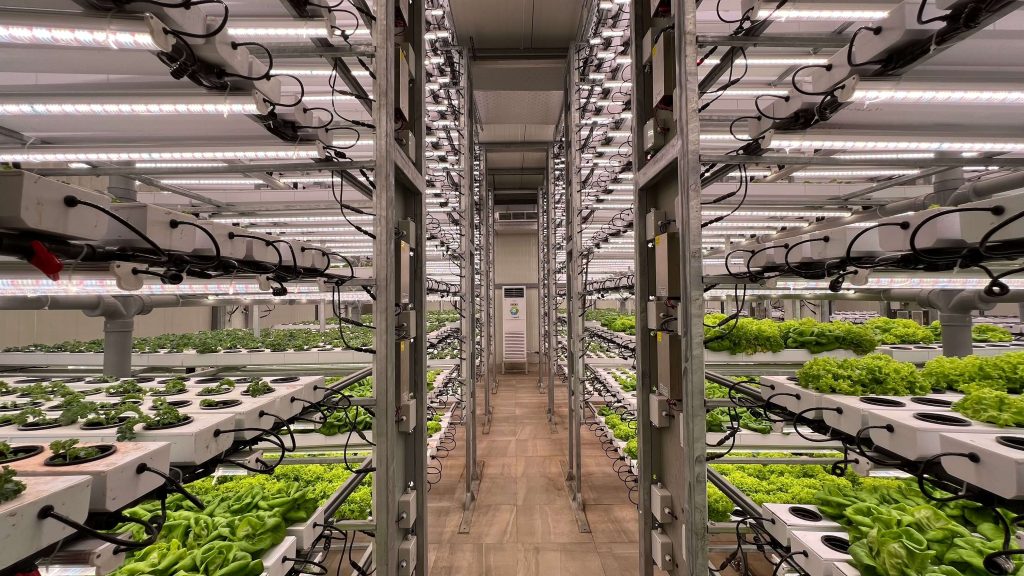
- Vertical farming
- Specialty crop production
- Controlled Environment Agriculture
- Agricultural research facilities
The specific environmental requirements may vary by crop, but the need for precise temperature, humidity, airflow, and environmental management remains consistent.
Frequently Asked Questions About Commercial Grow Room HVAC
What makes commercial grow room HVAC different from conventional HVAC?
Commercial grow rooms generate significant lighting heat and plant-generated moisture while requiring much tighter temperature and humidity control than conventional occupied buildings. Cultivation loads also change throughout the plant life cycle and daily lighting schedule.
How do you size HVAC for a commercial grow room?
Equipment sizing should consider more than room square footage. Lighting loads, plant density, transpiration, irrigation, target temperature and humidity, equipment heat, airflow, and operating schedules can all influence HVAC requirements.
Why is humidity control so important in a commercial grow room?
Dense plant populations can release substantial quantities of moisture through transpiration. Effective latent moisture removal helps maintain target relative humidity and reduces conditions favorable to mold, mildew, and condensation.
Can different grow rooms maintain different environmental conditions?
Commercial facilities often contain cultivation rooms operating at different stages and schedules. HVAC and control strategies can be designed around the environmental requirements of individual spaces or zones.
What size commercial grow room HVAC equipment does Cultiva Systems provide?
Cultiva Systems packaged units are available from 10 to 60 tons. Vertical and horizontal self-contained systems are available from 10 to 45 tons. Both air-cooled and water-cooled configurations are available.
Can Cultiva Systems HVAC integrate with a Building Automation System?
Yes. The FS32 controller provides native BACnet IP/MSTP and Modbus TCP/RTU communication for integration with compatible Building Automation Systems.
Does Cultiva Systems work directly with mechanical engineers and contractors?
Yes. Cultiva Systems works directly with engineers and contractors to understand the load requirements within each space and help provide equipment capable of achieving the desired environmental conditions.
Build Your Commercial Grow Facility Around Precise Environmental Control
A successful commercial cultivation operation depends on repeatability. Growers need the ability to maintain precise environmental conditions across multiple rooms, changing crop stages, lighting schedules, and production cycles.
That requires HVAC equipment designed for the unique sensible and latent loads created by indoor cultivation.
Cultiva Systems provides specialized Commercial Grow Room HVAC equipment, intelligent FS32 environmental controls, flexible equipment configurations, and collaborative technical support for commercial cultivation facilities throughout the United States and internationally.
From new construction and large-scale cultivation facilities to expansions and mechanical system upgrades, we work alongside engineers, contractors, facility developers, and growers to provide HVAC solutions based on the actual environmental demands of the operation.
Contact Cultiva Systems today to discuss your commercial grow room HVAC requirements and develop an environmental control solution for your cultivation facility.