Indoor Farming HVAC
Indoor Farming HVAC Designed for Precision Growing Environments
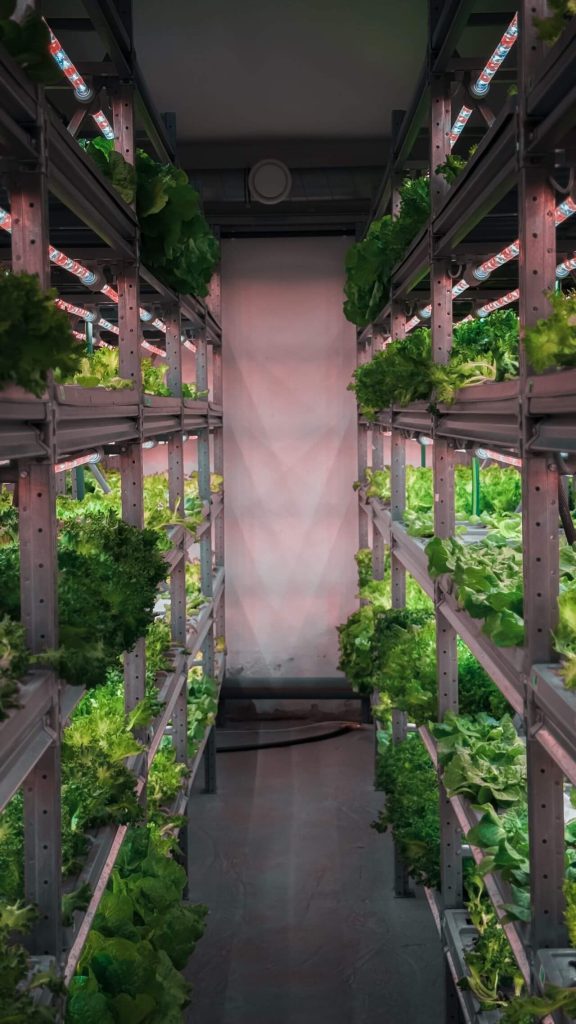
Successful indoor farming depends on the ability to create consistent growing conditions regardless of the weather, season, or environment outside the facility. Temperature, humidity, airflow, plant transpiration, lighting, irrigation, and crop density all affect conditions inside an indoor farm, creating HVAC demands that are significantly different from those found in conventional commercial buildings.
At Cultiva Systems, we specialize in Indoor Farming HVAC solutions engineered specifically for controlled growing environments. Our equipment and intelligent controls are designed to respond to the changing sensible and latent loads that occur throughout the plant life cycle, helping commercial growers maintain precise environmental conditions while improving efficiency, reliability, and crop consistency.
From vertical farms and specialty crop facilities to large-scale indoor cultivation operations, Cultiva Systems works directly with engineers, contractors, and facility operators to develop HVAC solutions around the specific requirements of each growing environment.
Your partner in cultivation
Why Indoor Farming Requires Specialized HVAC
Traditional commercial HVAC systems are primarily designed to maintain comfortable conditions for people. Indoor farms present an entirely different challenge.
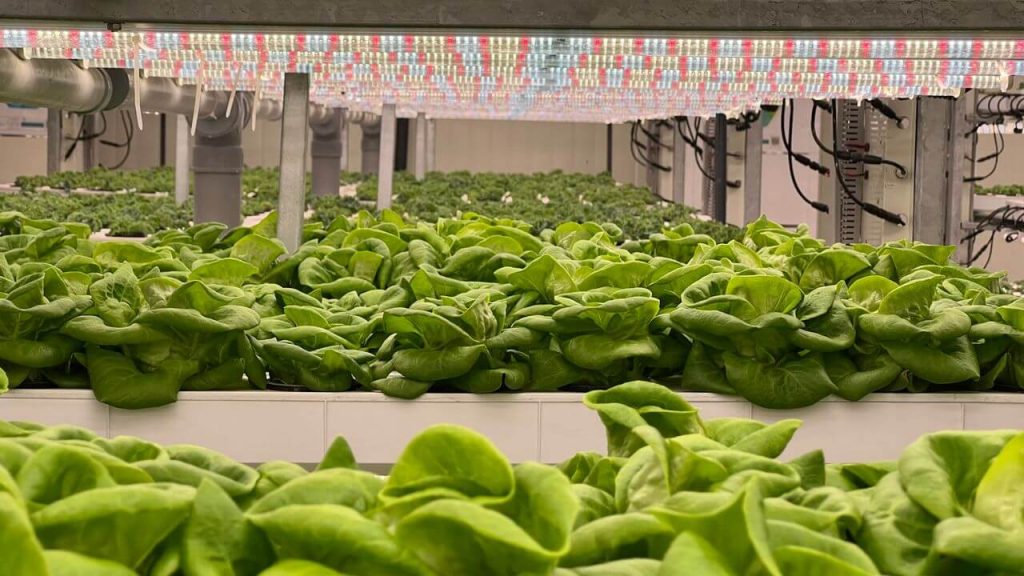
Plants continuously interact with their environment. They absorb water, release moisture through transpiration, respond to temperature and humidity, and generate changing environmental demands as they mature. At the same time, lighting systems, irrigation equipment, people, pumps, and other equipment contribute additional heat to the facility.
An effective indoor farming HVAC system must therefore manage multiple variables simultaneously, including:
- Sensible heat generated by lighting and equipment
- Latent moisture generated by plant transpiration
- Temperature stability
- Relative humidity
- Air circulation and distribution
- Changing day and night conditions
- Seasonal environmental changes
- Different requirements throughout the crop cycle
Cultiva Systems equipment is designed specifically around these challenges.
Managing Temperature in an Indoor Farm
Temperature affects nearly every aspect of plant development, including photosynthesis, respiration, transpiration, nutrient uptake, and growth rate.
Indoor farmers have the advantage of controlling temperature independently of outdoor conditions, but achieving that consistency requires HVAC equipment capable of responding to rapidly changing loads.
Lighting schedules provide a good example. When grow lights activate, the sensible heat load within a cultivation area can increase significantly. When those lights turn off, that load can decrease rapidly while plants may continue releasing moisture into the space.
Indoor Farming HVAC equipment must be capable of responding to these transitions without allowing dramatic environmental swings.
Cultiva Systems designs equipment and control strategies to maintain stable temperature conditions as loads change throughout the growing cycle.
Humidity and Plant Transpiration
One of the most significant differences between conventional HVAC applications and indoor farming is the amount of moisture introduced into the environment.
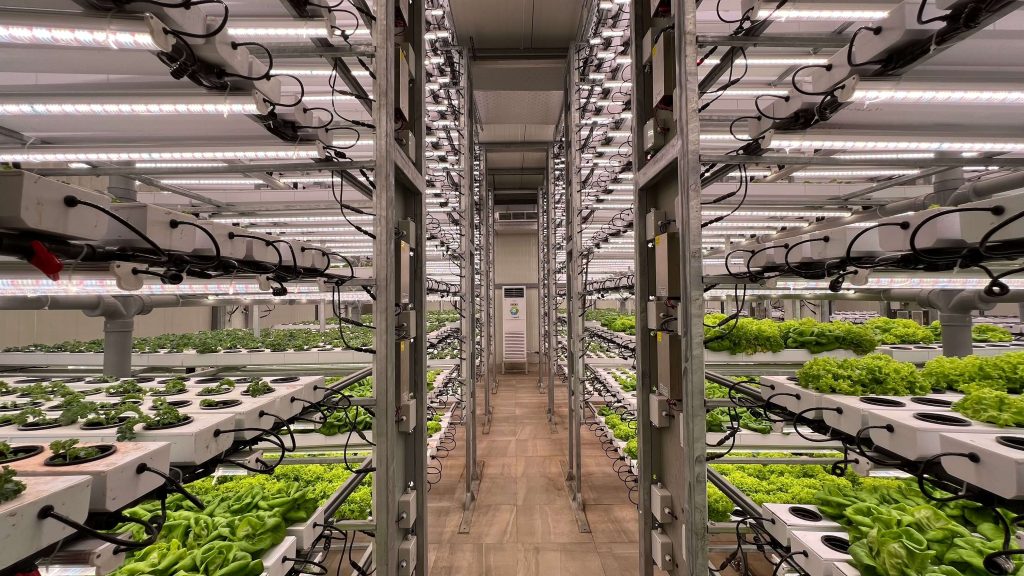
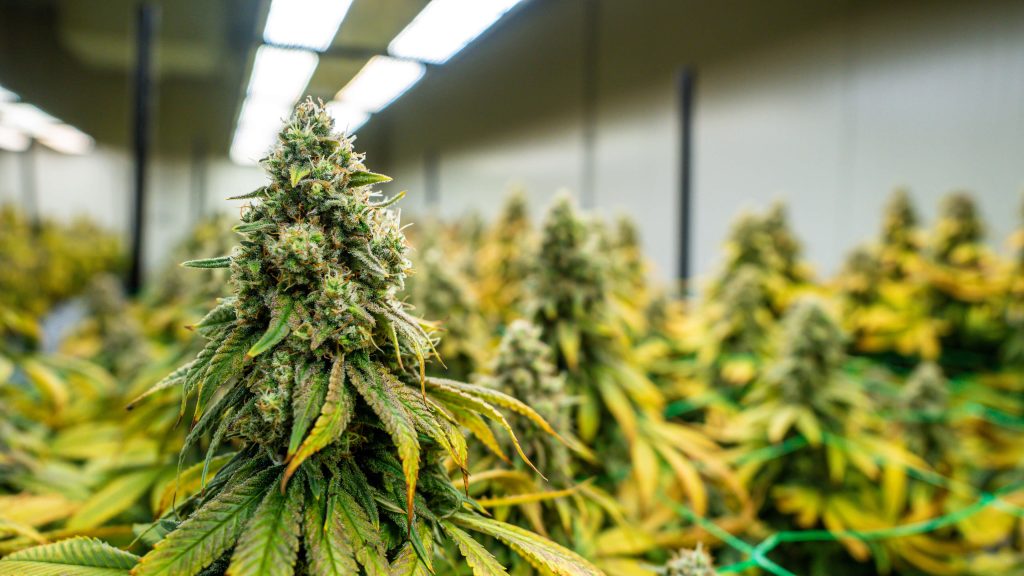
Plants naturally release water vapor through transpiration. As crop density and plant size increase, the amount of moisture entering the air can become substantial.
If that moisture isn’t effectively managed, excessive relative humidity can create conditions that contribute to:
- Mold and mildew
- Plant disease
- Reduced transpiration
- Inconsistent crop development
- Condensation
- Reduced product quality
For this reason, humidity management and latent moisture removal should be considered fundamental components of indoor farm HVAC design rather than secondary functions.
Cultiva Systems equipment is engineered to handle the demanding moisture loads associated with commercial indoor cultivation.
Intelligent Indoor Farm Environmental Controls
Advanced HVAC equipment becomes even more powerful when paired with intelligent controls.
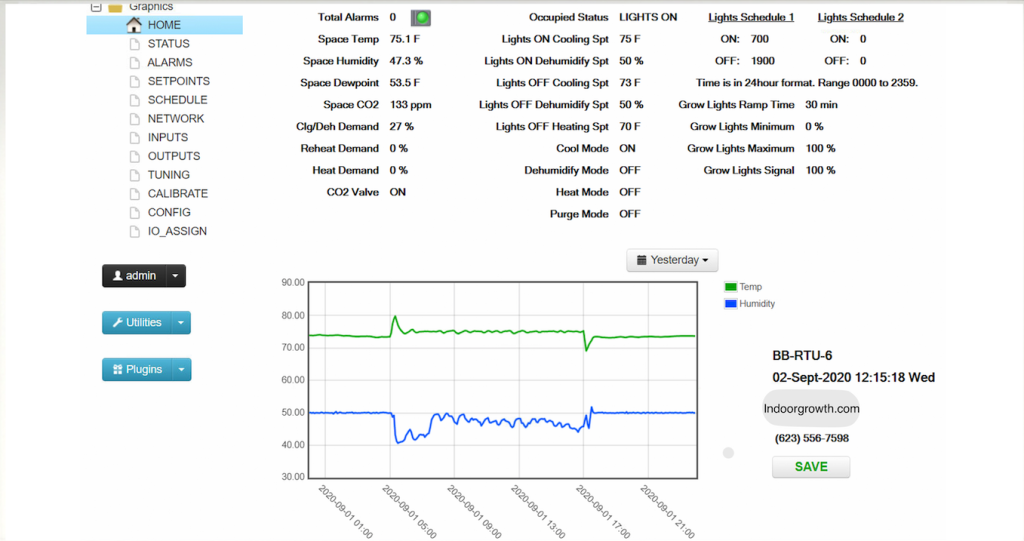
The Cultiva Systems FS32 controller provides a centralized platform for monitoring equipment operation and managing important environmental parameters throughout an indoor farming facility.
The controller’s built-in web server utilizes PHP and HTML5 graphics to provide a rich, browser-based user interface accessible across multiple devices.
Operators can access features including:
- Operational status monitoring
- Input and output monitoring
- Environmental setpoint adjustments
- Internal scheduling
- Historical data collection
- Alarm reporting
- System configuration
- Application backup and restore
- Customizable user accounts
Connectivity can be provided through hard-wired Ethernet or Wi-Fi using the supplied router.
This gives facility operators greater visibility into environmental performance while simplifying everyday system management.
Airflow and Environmental Uniformity
Maintaining the correct temperature and humidity at a sensor doesn’t necessarily mean those conditions exist throughout the entire growing area.
Indoor farms can develop microclimates caused by dense plant canopies, shelving systems, lighting arrangements, equipment placement, and inadequate air distribution.
Proper airflow helps minimize these variations.
An appropriately designed HVAC system can help promote:
- More uniform temperatures
- Consistent humidity throughout the room
- Reduced hot and cold spots
- Better air movement through plant canopies
- Improved CO₂ distribution
- Reduced areas of stagnant air
Environmental uniformity becomes particularly important in large commercial operations where even relatively small differences between growing zones can affect crop consistency.
Airflow and Environmental Uniformity
Maintaining the correct temperature and humidity at a sensor doesn’t necessarily mean those conditions exist throughout the entire growing area.
Indoor farms can develop microclimates caused by dense plant canopies, shelving systems, lighting arrangements, equipment placement, and inadequate air distribution.
Proper airflow helps minimize these variations.
An appropriately designed HVAC system can help promote:
- More uniform temperatures
- Consistent humidity throughout the room
- Reduced hot and cold spots
- Better air movement through plant canopies
- Improved CO₂ distribution
- Reduced areas of stagnant air
Environmental uniformity becomes particularly important in large commercial operations where even relatively small differences between growing zones can affect crop consistency.
HVAC That Adapts Throughout the Crop Cycle
Indoor farming isn’t a static process.
The environmental load generated by a room of young plants can be dramatically different from the load produced by a mature crop approaching harvest. Irrigation strategies, lighting intensity, plant density, and transpiration rates can all change as the crop develops.
That means HVAC equipment should be selected based on more than a single peak temperature calculation.
Cultiva Systems works with project engineers and contractors to understand the expected operating conditions throughout the growing cycle so equipment can respond effectively as loads change.
The goal is a growing environment that remains predictable even when the plants themselves are constantly changing.
Integration with Building Automation Systems
Large indoor farming facilities often incorporate HVAC into a broader building automation strategy.
The Cultiva Systems FS32 controller supports native BACnet IP/MSTP and Modbus TCP/RTU, simplifying communication with compatible Building Automation Systems.
Cultiva Systems’ standard sequence of operations can also incorporate:
- Space temperature control
- Humidity control
- CO₂ injection
- Purge operations
- High CO₂ alarm strobes
- Lighting
Bringing these functions together allows growers and facility managers to create a more coordinated approach to environmental management.
Maintaining Consistent Vapor Pressure Deficit
Maintaining the correct temperature and humidity at a sensor doesn’t necessarily mean those conditions exist throughout the entire growing area.
Indoor farms can develop microclimates caused by dense plant canopies, shelving systems, lighting arrangements, equipment placement, and inadequate air distribution.
Proper airflow helps minimize these variations.
An appropriately designed HVAC system can help promote:
- More uniform temperatures
- Consistent humidity throughout the room
- Reduced hot and cold spots
- Better air movement through plant canopies
- Improved CO₂ distribution
- Reduced areas of stagnant air
Environmental uniformity becomes particularly important in large commercial operations where even relatively small differences between growing zones can affect crop consistency.
Flexible HVAC Equipment for Indoor Farming Facilities
Facility layouts vary considerably across indoor agriculture projects. Cultiva Systems provides multiple HVAC configurations to give engineers and contractors greater flexibility when designing mechanical systems.
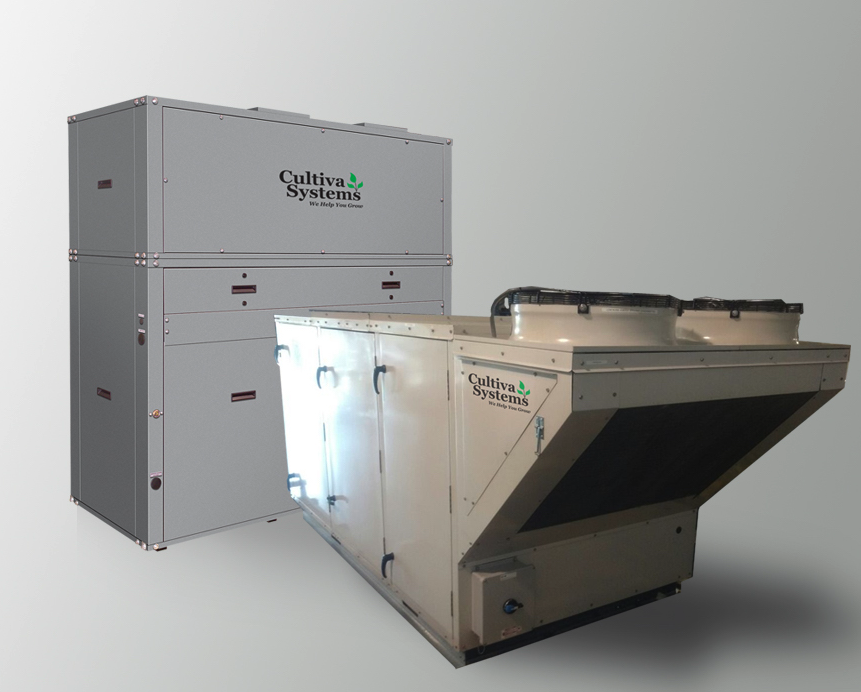
Packaged Rooftop Systems
Cultiva Systems packaged indoor farming units are available in air-cooled and water-cooled configurations from 10 to 60 tons.
Installation options include rooftop and ground mounting with multiple airflow arrangements, including bottom discharge and return, horizontal discharge and return, and custom top-discharge configurations.
Vertical & Horizontal Self-Contained Systems
Our vertical and horizontal self-contained indoor farming HVAC equipment is available in air-cooled and water-cooled configurations from 10 to 45 tons.
Removable panels provide field-configurable airflow options, including top, rear, and front discharge with return air from the rear of the unit.
These options allow equipment to be selected around the facility rather than forcing the facility design around a limited HVAC configuration.
Working Directly with Engineers and Contractors
There is no universal HVAC configuration for indoor farming.
Crop type, lighting, irrigation, room dimensions, plant density, operating schedules, building construction, equipment placement, and environmental targets can all influence system requirements.
Cultiva Systems works directly with engineers and contractors to understand the load requirements within each space and help ensure the selected equipment is capable of achieving the desired conditions.
This collaborative approach allows HVAC decisions to become part of the overall cultivation strategy rather than an afterthought during facility construction.
Indoor Farming HVAC for New Construction and Facility Expansion
Cultiva Systems can support both new indoor farming projects and the expansion or modernization of existing facilities.
During new construction, early coordination between cultivation teams, engineers, contractors, and HVAC specialists can help establish equipment requirements before mechanical infrastructure is finalized.
Existing operations may require a different approach. Increased plant density, upgraded lighting, expanded cultivation space, or changing environmental targets can create HVAC demands beyond those anticipated when the facility was originally constructed.
Evaluating the actual environmental requirements of the operation helps determine the appropriate path forward.
Frequently Asked Questions About Indoor Farming HVAC
How is indoor farming HVAC different from commercial HVAC?
Commercial comfort HVAC is primarily designed around conditions for building occupants. Indoor farming HVAC must address plant transpiration, high moisture loads, grow lighting, changing crop density, and precise temperature and humidity requirements throughout the growing cycle.
Why is humidity control so important in indoor farming?
Plants release significant amounts of water vapor through transpiration. Without adequate moisture removal, relative humidity can rise and create unfavorable growing conditions. Proper HVAC design helps manage these latent loads while maintaining desired temperature conditions.
Can indoor farming HVAC systems help manage VPD?
HVAC equipment controls two of the primary variables associated with VPD: temperature and relative humidity. Maintaining precise control over both allows growers to better manage environmental conditions according to their desired cultivation strategy.
What size indoor farming HVAC equipment does Cultiva Systems provide?
Cultiva Systems packaged units are available from 10 to 60 tons, while vertical and horizontal self-contained systems are available from 10 to 45 tons. Air-cooled and water-cooled configurations are available.
Can Cultiva Systems HVAC equipment integrate with a Building Automation System?
Yes. The FS32 control platform provides native BACnet IP/MSTP and Modbus TCP/RTU integration for compatible building automation applications.
Does Cultiva Systems work with project engineers?
Yes. Cultiva Systems works directly with engineers and contractors to understand the load requirements and desired environmental conditions of each project so appropriate equipment can be selected.
Build a More Predictable Indoor Growing Environment
Successful indoor farming requires the ability to create consistent conditions while the environmental demands of the crop continuously change. Temperature, humidity, airflow, transpiration, lighting, and plant development must all be considered when designing the mechanical systems responsible for maintaining the growing environment.
Cultiva Systems provides specialized Indoor Farming HVAC equipment, advanced FS32 controls, and collaborative project support for commercial indoor agriculture facilities throughout the United States and internationally.
Whether you’re designing a new indoor farm, expanding an existing cultivation operation, or evaluating HVAC performance within your current facility, Cultiva Systems can help develop a solution around the environmental requirements of your operation.
Contact Cultiva Systems to discuss the HVAC and environmental control requirements for your indoor farming project.